
Kitchen Pantry Organization: 21 Ideas That Actually Stick
I used to have three bags of the same rice in my kitchen pantry. Not because I love rice. Because every time I opened that door, I couldn't see what I already owned. So I bought another bag. And another.
If your kitchen pantry looks like a place where good intentions go to hide, you're not alone, and you're not the problem. Most kitchen pantries aren't messy because the people who use them are messy. They're messy because nobody ever gave them a system.
Here are 21 ways to give your kitchen pantry one. Start with two or three. Don't try all 21 in a weekend, that's how burnout happens.
Start With an Honest Look
1. Take everything out and actually look at it. Every can, every box, every mystery bag of something you bought in 2019. You can't organize what you can't see. Pull it all out, check the dates, and be honest about what's expired or what you know you'll never use.
2. Let go of what isn't serving you. Unopened, unexpired food you won't eat goes to a food bank. Expired food goes in the trash. This isn't about being wasteful. It's about making room for a kitchen pantry that actually works for the life you're living now, not the life you thought you'd be living when you bought that specialty flour three years ago.
I worked with a client who found a spice jar in her kitchen pantry from a house she'd moved out of nine years earlier. Nine years, and two moves. She wasn't a hoarder. She was busy, and the kitchen pantry was the one place nobody made her look at. That's true for most of us. It's not the room you live in, it's the room you close the door on. Which is exactly why it quietly fills up.
Give Everything a Home
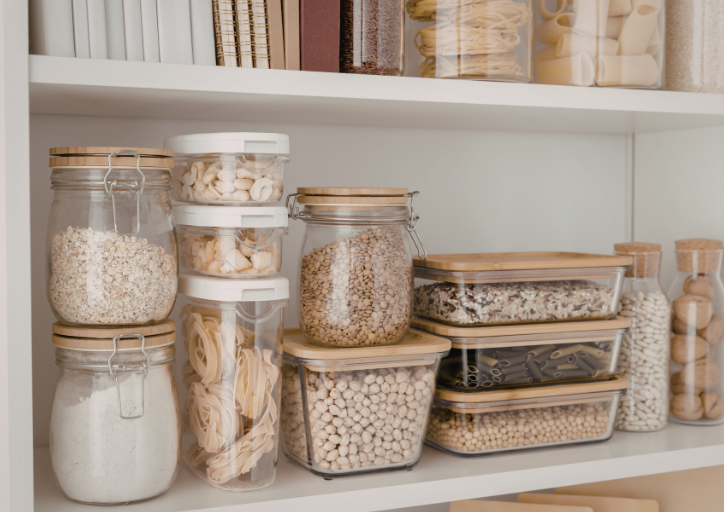
3. Sort into simple categories. Grains. Snacks. Canned goods. Baking. Spices. You don't need a complicated system, you need a clear one. When everything has a category, everything has a place to return to.
4. Put what you use most within easy reach. Eye level for your everyday items. Higher or lower shelves for the things you grab twice a year. Your kitchen pantry should work like your kitchen does, not against it.
Make the Space Work Harder
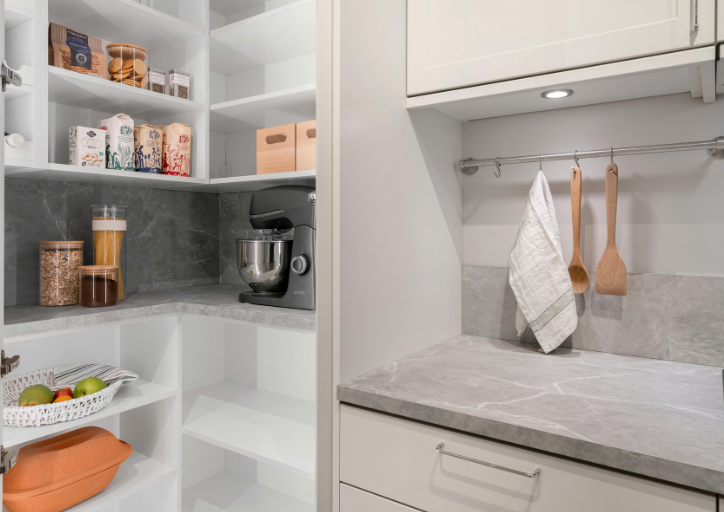
5. Use your vertical space. Most kitchen pantries waste the space above eye level. Adjustable shelving lets you fit what you actually own instead of what the builder assumed you'd own.
6. Add risers or tiered shelves. Canned goods and spices disappear to the back of a flat shelf and stay there until they expire. A tiered riser means you can see everything at a glance, front row to back row. This expandable metal shelf riser adjusts to fit almost any shelf.
7. Try a lazy Susan for deep corners. If your kitchen pantry has an awkward corner or a deep shelf where things go to get lost, a rotating tray solves it. Spin it, grab it, done. This turntable is the size I'd start with for most cabinet shelves.
8. Use the back of the door. A shallow rack or a few hooks on the door turns wasted space into real storage for spices, packets, or small bottles, without taking up a single inch of shelf.
9. Don't forget overhead space. The area above your kitchen pantry door is usually empty. A rack up there is a good spot for paper goods or anything lightweight you don't need daily.
Contain It So You Can See It
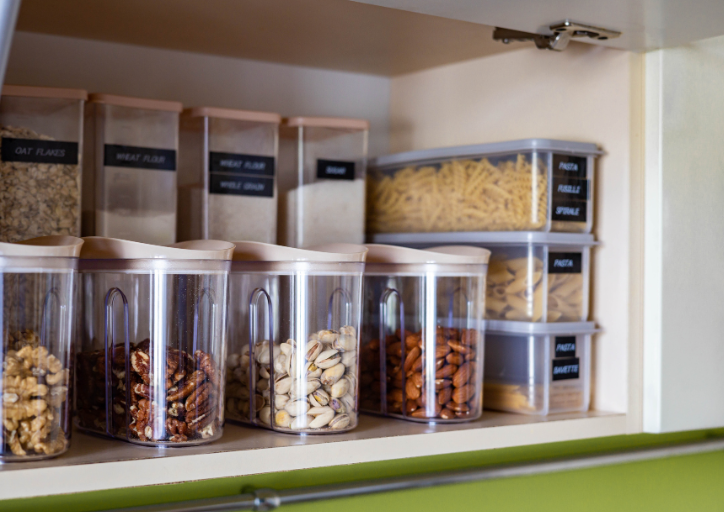
10. Switch to clear containers. When you can see what you have, you stop buying doubles. Clear containers are the single fastest way to stop a kitchen pantry from refilling itself with things you already own. This airtight set is a solid place to start if you're doing this for the first time.
11. Decant what comes in bags. Flour, sugar, rice, cereal. Moving these into uniform containers does two things at once: it keeps pests out and it makes your shelves look like they belong to one household instead of five different grocery trips.
12. Group loose items into baskets and bins. Snacks in one bin. Lunch supplies in another. Baking odds and ends in a third. When items have a container instead of just a shelf, putting things away actually happens.
13. Label everything. Not for style points, for peace. A label means everyone in your house knows where something lives and where it goes back. If you have grandkids in and out, picture labels help too. A simple label maker makes this a five-minute job instead of a handwritten mess.
Keep It From Sliding Back

14. Practice first in, first out. New groceries go to the back. Older items move to the front. This one habit, done consistently, quietly prevents most of the waste that creeps back into a kitchen pantry over time.
15. Give seasonal and bulk items their own zone. Holiday baking supplies and warehouse-store purchases shouldn't crowd out what you reach for every day. Give them a dedicated spot so your everyday shelves stay clear.
16. Build in a maintenance rhythm. A kitchen pantry isn't a one-time project, it's a relationship. A quick fifteen minutes once a season keeps the system you built from quietly falling apart.
17. Let the system flex with your life. Kids move out. Grandkids move in. Your eating changes. Your kitchen pantry should be able to shift with you instead of you fighting a system that no longer fits your life.
A Few Finishing Touches
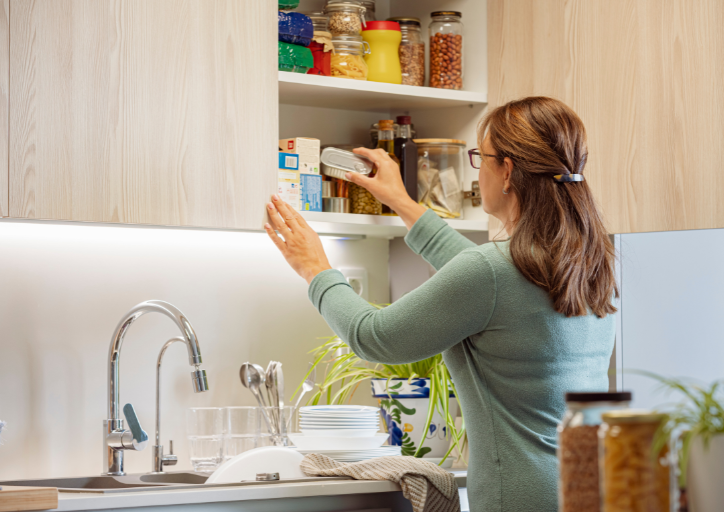
18. Add light where you need it. A motion light or an LED strip in a dim kitchen pantry means you're not digging around with your phone flashlight looking for the cumin.
19. Think through safety. If you have little ones or pets in and out of your home, a latch on a lower cabinet or a designated safe shelf keeps everyone out of what they shouldn't get into.
20. Use a simple app if it helps you. You don't need technology to have an organized kitchen pantry, but if a grocery or inventory app keeps you from overbuying, use it. The goal is a system you'll actually keep up with, not the fanciest one.
21. Choose reusable where you can. Cloth bags, refillable containers, buying in bulk to cut down on packaging. Small shifts, and they add up over time in a kitchen pantry that's meant to last.
The Real Reason This Matters

Here's what I've learned doing this work with women who are standing at the edge of a move, a downsize, or just a season where the house finally needs to catch up with their life: the kitchen pantry is rarely just about the kitchen pantry.
It's one of the smaller rooms in the house. It's contained. You can finish it in an afternoon. And when you close that door and it actually makes sense, something shifts. You start to believe the rest of the house might be possible too.
If you've read where to start decluttering so you don't get overwhelmed and quit, you know I don't believe in tackling the whole house at once. Start small. Start where you can actually finish. The kitchen pantry is a good place to prove to yourself that you can.
And if pulling everything out of that kitchen pantry surfaces a bigger feeling, if you look at those shelves and think "this is everywhere in my house," that's worth paying attention to. That's not a kitchen pantry problem, that's closer to why letting go of stuff feels so hard in the first place.
Where to Go From Here
If this list gave you a plan for one room, great. If it made you realize the kitchen pantry was the easy one and the rest of your home feels a lot bigger, I'd love to talk with you about it.
Schedule a free clarity call with me. We'll talk about what's actually going on in your home and what your next right step looks like. No pressure, no pitch, just a conversation.
One more thing: containers and bins will only get you so far. If you've bought your way through a few organizing systems already and the clutter still crept back, read why organizing bins won't fix your clutter before you buy anything else.
For more organizing inspiration, check out my 97 Best Organization Ideas.
This post contains affiliate links. If you buy through them, I may earn a small commission at no extra cost to you. I only recommend what I'd actually put in my own kitchen pantry.
