Letting Go of Stuff: Why It Feels So Hard
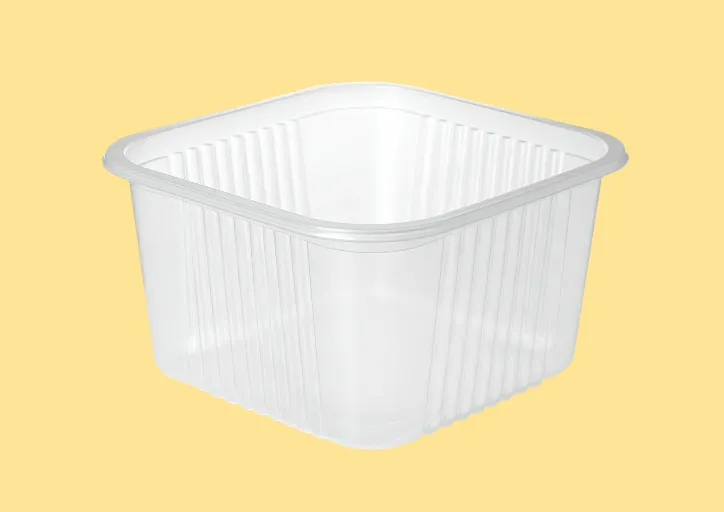
Last Tuesday, I stood in my kitchen holding a plastic container with no lid. It's one of the "nice" heavy plastic kinds. Not those cheap, throw-away kind.
I don’t know where the lid went. I don’t know when it left. I don’t even know what this container once held.
But what I do know is this:
I have moved this lidless container to three different houses.
Three.
At this point, it’s less “food storage” and more “family heirloom.”
And as ridiculous as that sounds, this tiny, useless piece of plastic perfectly explains why letting go of stuff is so hard.
Because if I can’t easily throw away a container that literally has no purpose… what does that say about the rest of the things in my home?
If you’ve ever found yourself holding onto something that makes no logical sense, you are not alone.
Letting go of stuff is not a discipline problem.
It’s just human.
And once you understand why, the entire process starts to feel different.
Letting Go of Stuff Is Not About the Stuff
Here’s what most people think:
If I don’t use it, I should get rid of it.
Simple.
Except it’s not.
Because nothing in your home is just an object.
That sweater you haven’t worn in five years? It’s from a trip you loved.
That stack of papers? They represent projects you meant to finish.
That box in the closet? It’s a version of your life you’re not quite ready to say goodbye to.
This is the first truth about letting go of stuff:
You are never just deciding about the item.
You are deciding about what the item represents.
And that is emotional work, whether you realize it or not.
The Guilt That Sneaks In When Letting Go of Stuff

There is a very specific thought that shows up when you try to declutter:
“But I spent good money on this.”
Or:
“This was a gift.”
Or:
“It’s still perfectly good.”
So instead of letting go of stuff, you keep it as proof that you are responsible, grateful, and not wasteful.
But here’s the part we don’t say out loud:
Keeping it doesn’t undo the money you spent.
Keeping it doesn’t honor the gift.
Keeping it just keeps the guilt visible in your home.
And that guilt quietly follows you from room to room.
Letting Go of Stuff Means Letting Go of a Version of You

I once worked with a woman who had an entire closet filled with business clothes.
Beautiful clothes. High quality. Expensive.
She hadn’t worn them in eight years.
When I asked her about them, she said, “I keep thinking I might go back to that life.”
But as we talked, she realized something hard:
She didn’t want to go back to that life.
But letting go of stuff in that closet felt like admitting that chapter was over.
This is a huge reason letting go of stuff feels heavy.
You are not just clearing a closet.
You are acknowledging that life has changed.
The “What If I Need It?” Trap

This one sounds practical. Responsible, even.
What if I need this someday?
So you keep it. Just in case.
But “just in case” is one of the biggest reasons homes quietly fill up.
Because someday rarely comes.
And in trying to prepare for every possible future, you crowd your present.
Letting go of stuff often requires trusting that Future You will be capable of handling things when they arise.
Decision Fatigue and Letting Go of Stuff

Every single item asks you to make a decision.
Keep or donate. Store or toss. Now or later.
After about 20 decisions, your brain gets tired.
After 100, it shuts down.
This is why you start decluttering with energy and end by shoving things into a drawer.
It’s not that you don’t want to keep going.
It’s that your brain has run out of decision-making power.
And letting go of stuff requires more decisions than most people realize.
A Small Story From My Own House

There is a drawer in my house that I avoided for months.
Not because it was terrible.
But because it required decisions.
Receipts. Cords. Random papers. Old coupons.
One day, I finally opened it and thought, “I’ll just do five things.”
Five.
That’s it.
And you know what happened?
I finished the entire drawer in ten minutes.
Because starting small removed the mental weight I had attached to it.
That’s an important part of letting go of stuff.
You have to make it smaller than your brain thinks it is.
Letting Go of Stuff Gets Easier When You Ask a Different Question
Instead of asking:
“Should I keep this?”
Try asking:
“Do I want this in my current life?”
Not your past life.
Not your imaginary future life.
Your life right now.
That question brings clarity faster than anything else when letting go of stuff.
Why Letting Go of Stuff Feels Easier With Support

This is the part most women don’t realize.
Letting go of stuff is incredibly hard to do alone because all the thoughts get louder when you’re by yourself.
The guilt.
The memories.
The what-ifs.
When someone else is there, those thoughts get processed instead of recycled.
And decisions become lighter.
You stop overthinking.
You start moving.
That changes everything.
You Are Not Bad at Letting Go of Stuff
If you’ve struggled with this for years, please hear this:
You are not lazy.
You are not incapable.
You are doing emotional and mental work that no one prepared you for.
Of course it feels hard.
Letting go of stuff is not a skill we’re taught.
But it is one you can learn.
A New Way to Start Letting Go of Stuff
Do not start with the attic.
Do not start with memory boxes.
Do not start with the hardest place in your house.
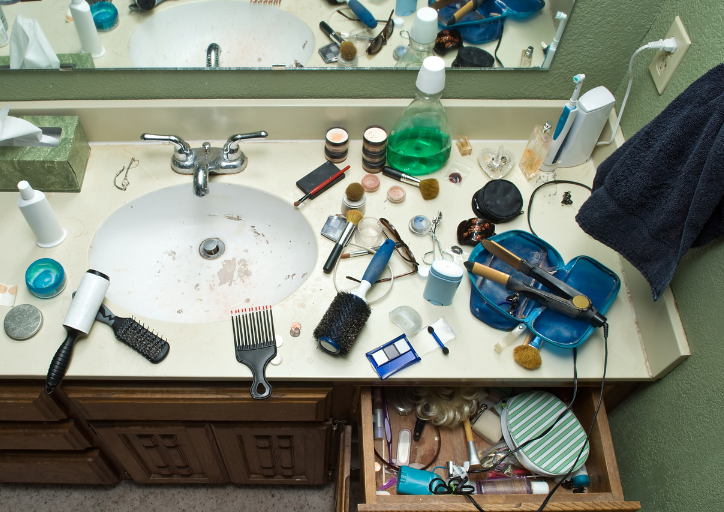
Start with a bathroom drawer. A kitchen shelf. A single cabinet.
Somewhere with almost no emotion attached.
This builds decision confidence.
And that confidence carries into the harder places.
That’s how real progress happens when letting go of stuff.
You Don’t Have to Do This Alone
If you’ve been trying to power through this by yourself for years, it might be time to try a different approach.
Not more motivation.
Not more bins.
Support while you’re making the decisions.
Because letting go of stuff was never meant to feel like a solo battle in your own home.
If you’re reading this and thinking, I wish someone could help me think through this in real time, you don’t have to keep doing it alone. A Clarity Call is simply a conversation about what’s going on in your home and where you feel stuck. I’ll help you see a starting point that feels doable and we can talk through what support might look like for you.
Sign up for your free clarity call here: https://nancytraylor.com/clarity_call
📌Before You Go…
If this resonated, you may enjoy these:
Letting go of stuff is not about becoming a different person.
It’s about creating a home that reflects the life you’re living right now.
